
HANDLED™ | 90 DAY OPERATIONAL TRANSFORMATION + IMPLEMENTATION
Your Business Has Outgrown the Way You’ve Been Operating It.
Your business is generating revenue, serving clients, and creating opportunities.
But behind that success, you are still personally compensating for systems, workflows, processes, and decisions the business should be capable of carrying without you.
Handled is where we change that.
I assess how your business actually operates, identify what it has outgrown, and build and implement the infrastructure required to support the level of business you are becoming.
You’ve already proven the business can grow.
Now we build the operation capable of holding it.
$3,500 | Multiple Connected Priorities | Done-for-You Implementation
Your vision doesn’t have to become your workload.

Growth Has a Way of Exposing What
Your Business Can No Longer Carry.
The business did not suddenly become difficult to operate.
It evolved.
You added clients.
New offers.
More software.
More moving parts.
Maybe a contractor or team member.
More ways for people to enter the business.
More expectations.
More responsibility.
But every layer of growth introduced operational complexity, and the infrastructure underneath the business did not necessarily evolve with it.
So you adapted.
You created workarounds.
You remembered what the system didn’t.
You followed up when the workflow didn’t.
You answered questions the process should have answered.
You stepped in when something stalled.
You became the final checkpoint for decisions, quality, communication, and execution.
And because you are good at what you do, you made it work.
That is exactly why this can be difficult to recognize.
A founder can compensate for weak infrastructure so effectively that the business appears more operationally sound than it actually is.
Until growth asks it to carry more.
More clients expose inconsistencies in delivery, and eventually the cost shows up in your time and the client experience.
More team members expose what has never been properly documented, and the cost shows up in your attention and their ability to execute without you.
More visibility exposes weaknesses in the client journey, and the cost shows up in communication, consistency, and the reputation you are working to build.
More offers expose disconnected workflows, and the cost shows up in greater complexity, duplicated effort, and thinner margins.
More opportunity exposes how much of the business still depends on your direct involvement, and the cost shows up in your ability to pursue what is next without neglecting what already exists.
Growth didn’t create those problems. It revealed what the current infrastructure could no longer support.
And that distinction matters.
Because when you mistake the symptom for the problem, you solve the wrong thing.
You assume you need another automation when the workflow itself needs to be redesigned.
You assume you need another person when the process has never been made clear enough for someone else to own.
You assume you need to work harder when the business has simply reached the limit of what its current operating model can support.
This is an Operational Gap.
It is the distance between what your business is asking to become and what its current infrastructure is capable of supporting.
And when that gap isn’t addressed, the founder usually becomes the bridge.
Why Handled Is Different
From Consulting, Strategy, or Hiring Someone to Execute a List of Tasks
A consultant can tell you what needs to change.
A strategist can help you determine what should happen next.
An implementer can build what you tell them to build.
Handled sits at the intersection of all three.
I assess how your business actually operates, identify what is creating friction, dependency, inefficiency, or unnecessary complexity, determine what the business requires, and then build and implement the approved solution.
Because operational problems are rarely as simple as, “I need a new CRM,” or “I need this automated.”
Sometimes the workflow needs to be redesigned before it should be automated.
Sometimes the client journey needs to be restructured before the CRM should be configured.
Sometimes the software is not the problem at all.
And sometimes the thing you thought needed to be built doesn’t need to exist.
That is why Handled does not begin with a predetermined solution.
We diagnose first. We determine what matters. Then we build accordingly.
You are not paying me to blindly execute instructions.
And you are not paying me to hand you recommendations that become another project for you to manage.
You are bringing me into the business to think, architect, build, and implement alongside you.
Operational Transformation Has an
Order of Operations.
When multiple parts of a business need attention, fixing everything at once is not the answer.
And neither is starting with whatever feels most urgent.
One operational decision affects another.
Your client journey affects your workflows.
Your workflows affect what should be automated.
Your service delivery affects what needs to be documented.
Your team structure affects where decisions should live.
Your software should support those decisions, not dictate them.
So the work has to happen in the right order.
Before we automate, we need to know the process is worth repeating.
Before we document, we need to know the workflow actually works.
Before we delegate, we need clarity around ownership, expectations, and decision making.
Before we optimize for growth, the operation underneath that growth needs to be stable enough to support it.
That is why Handled is not one giant implementation project.
It is a deliberate progression through three operational objectives.
First, we stabilize what is creating friction.
Then, we strengthen what the business needs underneath it.
Finally, we optimize what has been built for what comes next.
Each container has a different job.
Each one builds on the work before it.
And together, they move the business from founder compensated operations to intentionally designed infrastructure.
Stabilize. Strengthen. Optimize.
This is how Handled works.
Three Containers.
One Operational Transformation.
Handled unfolds across three sequential containers, each with a distinct operational objective.
We are not attempting to overhaul every moving part of your business at once. We are looking at the operation as an interconnected environment, determining what requires attention first, and building from there.
The scope is customized. The sequence is intentional.
What we address inside each container will depend on what your business actually requires, but the progression remains the same:
Stabilize → Strengthen → Optimize
CONTAINER ONE
Stabilize the Operation
We start with what is making the business harder to operate than it needs to be.
Before we build anything new, I need to understand what is already happening.
How does someone become a client?
What happens after they pay?
How does work move through the business?
Where does information live?
Where are you still required to intervene to keep things moving?
And just as importantly:
What is already working and should not be disturbed?
This container is about understanding the operation as it exists today, identifying the most consequential points of friction, and addressing what needs to be stabilized before we strengthen the infrastructure around it.
Depending on the business, that could mean improving onboarding, restructuring communication, cleaning up workflows, correcting payment or scheduling processes, strengthening client touchpoints, organizing existing systems, or eliminating unnecessary steps altogether.
The objective is not to change everything.
It is to stop unnecessary operational friction from consuming resources the business needs elsewhere.
By the end of this container, we have greater clarity around how the business should operate, the immediate friction has been addressed, and we know what the infrastructure underneath it needs to support.
This gives us something stable enough to build on.
CONTAINER TWO
Strengthen the Infrastructure
Now we build what the operation actually needs.
This is where much of the architecture and implementation happens.
Once we understand how the business needs to function, we can strengthen the systems responsible for making that happen consistently.
That may include the architecture and implementation of your client journey, workflows, CRM, automations, communication systems, scheduling, payment flow, project management, service delivery, backend organization, or other operational systems identified within the approved scope.
But there is an important distinction:
We are not adding technology for the sake of having more technology.
Every system we introduce, configure, rebuild, connect, or remove has to earn its place in the operation.
It should reduce unnecessary manual effort.
Create greater consistency.
Make information easier to access.
Clarify what happens next.
Improve how clients move through the business.
Support the way work actually gets delivered.
Or reduce unnecessary dependency on you.
If it does none of those things, we have to question why it exists.
This is where strategy becomes architecture and architecture becomes implementation.
We are no longer talking about how the business should work.
We are building the environment that allows it to work that way.
By the end of this container, the business should have stronger infrastructure beneath the work it is already doing.
Not simply more systems.
Better designed systems with a reason for being there.
CONTAINER THREE
Optimize for What’s Next
Once the operation is stronger, we make it easier to repeat, maintain, delegate, and grow.
This is where we move beyond getting the systems to work and begin asking a more sophisticated question:
Can the business continue operating this way as it becomes more successful?
We look at what has been built and identify what needs to be refined, documented, standardized, delegated, simplified, or strengthened for the next stage of the business.
This may include workflow refinement, SOP development, process documentation, delegation systems, role clarity, operational governance, client experience refinement, automation adjustments, software optimization, and scalability preparation.
But the objective is bigger than documentation.
We are reducing the amount of institutional knowledge that exists exclusively inside your head.
The business should know how things happen.
Your systems should know what happens next.
The people supporting you should know what they own.
Your clients should know what to expect.
And you should not have to personally reestablish that clarity every time the business moves.
This is where the work becomes increasingly transferable, repeatable, and sustainable.
So when the business encounters more clients, more visibility, more responsibility, a larger team, another offer, or a bigger opportunity, you are not automatically required to absorb the additional complexity yourself.
We are preparing the operation to carry more of what you have historically carried for it.
What Happens Across All Three Containers
Handled is collaborative, but you are not being handed an implementation project to manage.
You provide the context, access, institutional knowledge, decisions, feedback, and approvals I need to understand your business and protect the integrity of what we are building.
I take responsibility for turning that information into operational direction and implementation.
Throughout the engagement, I am looking across the business rather than treating every request as an isolated task.
Because changing one workflow may affect an automation.
Changing an automation may affect client communication.
Changing the client journey may affect your CRM.
Changing service delivery may affect what your team needs to know.
The pieces have to work together.
That is the Handled experience.
Not a collection of disconnected improvements.
Not ninety days of miscellaneous implementation.
A deliberate operational transformation built around what your business actually requires.
We stabilize what is creating friction.
We strengthen what needs to carry the business.
We optimize what has been built for what comes next.
And when we’re finished, the goal is not for your business to look more sophisticated behind the scenes.
The goal is for it to operate more intelligently because of what we built.
What Could Be Handled?
Every business enters Handled with a different operational reality.
One business may need its client journey rebuilt. Another may have strong client delivery but weak internal workflows. Another may have accumulated software, automations, processes, and workarounds that no longer make sense for the business it has become.
Handled is not built around a predetermined list of deliverables.
Your scope is determined by what we uncover, what matters most, and what can be meaningfully transformed within the engagement.
Here are some of the operational areas that may come under our attention.
How People Enter Your Business
We may address inquiry, lead capture, sales flow, consultations, scheduling, payments, proposals, contracts, follow up, and the handoffs between prospect and client.
The objective: Create a clear path into the business without you manually shepherding every person through it.
How Clients Move Through Your Business
We may address onboarding, welcome communication, intake, expectations, client portals, scheduling, service navigation, progress communication, offboarding, retention, referrals, and other critical client touchpoints.
The objective: Create an intentional client experience that can remain consistent without requiring your constant intervention.
How Work Moves Through Your Business
We may address workflows, project stages, handoffs, approvals, recurring processes, task ownership, project management, fulfillment, internal communication, and operational sequence.
The objective: Make it clear what happens, when it happens, who owns it, and what moves the work forward.
How Your Technology Supports the Operation
We may configure, restructure, connect, simplify, or eliminate systems across your CRM, automation, scheduling, payments, forms, project management, communication, client portals, email, and other operational platforms.
Sometimes that means building something new.
Sometimes it means making what you already own work properly.
And sometimes the smartest operational decision is removing technology that is creating more complexity than value.
The objective: Build a technology environment that reduces friction instead of introducing more of it.
How Knowledge Moves Beyond You
We may address SOPs, workflow documentation, process standards, role clarity, decision ownership, recurring responsibilities, internal resources, and the information someone else needs to execute without constantly coming back to you.
The objective: Turn what only you know into operational knowledge the business can actually use.
How the Business Prepares for More
We may examine founder dependency, operational bottlenecks, delivery capacity, unnecessary complexity, delegation readiness, workflow limitations, client experience vulnerabilities, and infrastructure that could become a constraint as the business grows.
The objective: Strengthen the operation before additional revenue, clients, visibility, responsibility, or opportunity expose what it cannot currently support.
But Handled Is Not About Touching Everything.
A $10,500 engagement is not about how many projects we can fit into ninety days.
It is about identifying and implementing the work that will create the greatest operational impact.
More implementation does not automatically create a better operation.
The value of Handled is determining what deserves intervention, what does not, what needs to happen first, and what will create the greatest operational impact within the approved scope.
Some things will be built.
Some will be rebuilt.
Some will be automated.
Some will be documented.
Some will be simplified.
Some will be eliminated entirely.
And some will intentionally be left alone.
“Handled is not measured by how many things we touch. It is measured by whether we touched the right things.”
The goal is not to do more to your business.
The goal is to make better operational decisions about what your business actually needs.
Then we build accordingly.
Handled Is Built for a Business That Has
Something Real to Operate.
Handled is not about preparing for the possibility that your business might grow someday.
There is already something here worth strengthening.
Clients are being served.
Revenue is being generated.
There are offers to deliver, relationships to manage, opportunities to consider, and a reputation worth protecting.
The business works.
But it has reached a point where how it operates matters just as much as what it sells.
Handled is for the service based entrepreneur who recognizes that the next stage of the business cannot be supported by continuing to personally compensate for what the operation lacks.
This Is Likely the Right Engagement for You If:
Your business has outgrown its original operating model.
Processes that worked when the business was smaller, simpler, or serving fewer clients are beginning to show their limitations.
Too much operational knowledge still lives with you.
You know how everything works because you built it, but the business has not translated enough of that knowledge into systems, processes, documentation, and clear ownership.
Your systems exist, but they do not function as one operating environment.
You may already have a CRM, scheduling platform, automations, project management software, forms, payment systems, and other technology, but the pieces are not working together as intelligently as they could.
You want implementation, not another plan sitting on your desk.
You want someone capable of looking beyond the symptom, determining what the business actually requires, and turning that direction into something operational.
You are prepared to provide the necessary context, access, decisions, and approvals, but you do not want to be responsible for architecting and executing the transformation yourself.
You are willing to change what no longer makes sense.
Handled may reveal processes, platforms, habits, or ways of working that the business has outgrown. You are willing to make operational decisions based on what the business needs now, rather than preserving what is familiar.
And perhaps most importantly:
You are ready to invest in how the business operates with the same seriousness you have invested in getting people to buy from it.
Because eventually, marketing cannot compensate for operations.
More demand does not fix weak delivery.
More clients do not fix inefficient workflows.
More revenue does not automatically create stronger infrastructure.
The front of the business can only grow as intelligently as the operation behind it is prepared to support.
Handled May Not Be the Right Fit If...
You are still validating whether there is a viable business to build, need a single defined implementation project, are looking for unlimited execution across unrelated priorities, or are unable to provide the access, decisions, context, and approvals required to build the operation correctly.
Handled requires collaboration. It does not require you to manage the implementation.
There is a difference.
You remain the authority on your vision, clients, expertise, and where you want the business to go.
I take responsibility for helping translate that vision into an operation capable of supporting it.
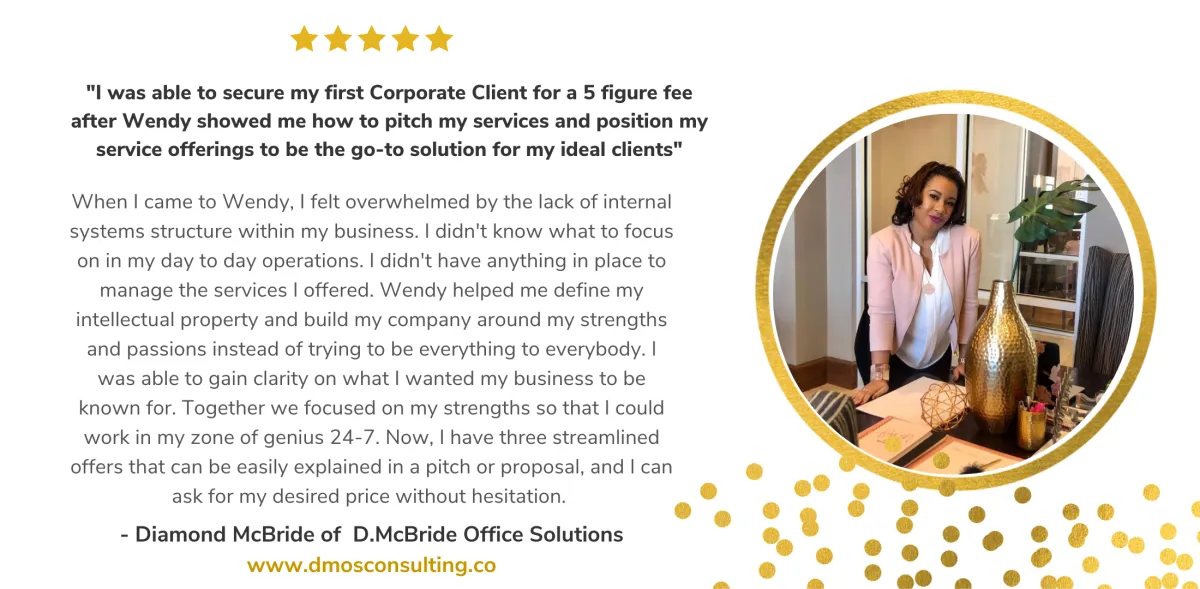
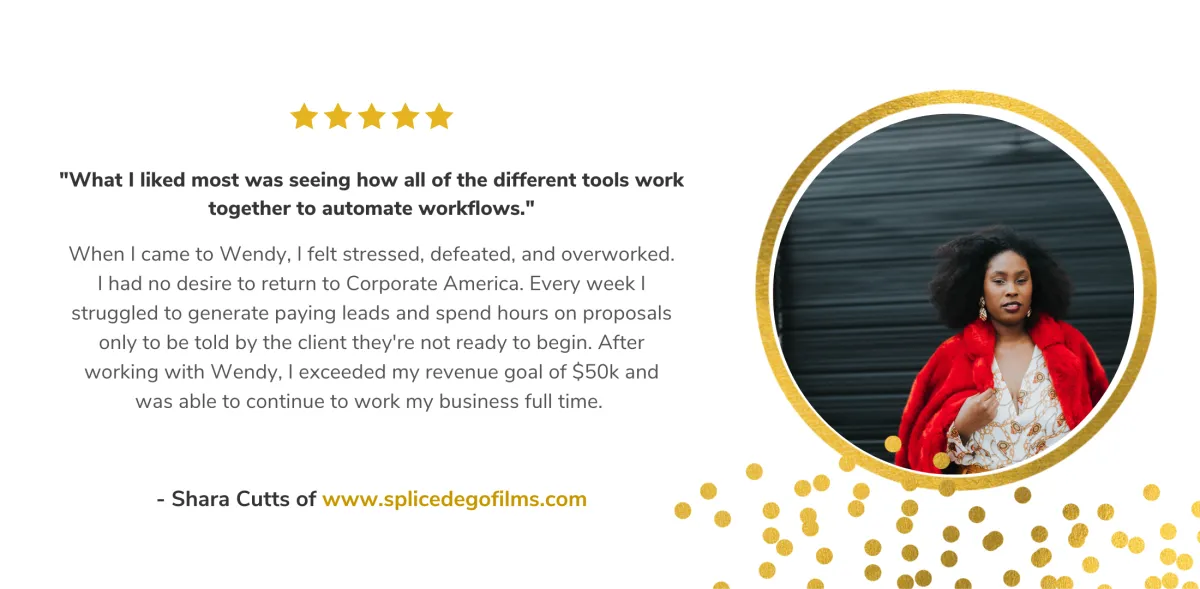
CLIENT RESULTS
Better Decisions Build Better Businesses.
The greatest transformation isn't simply generating more revenue.
It's building a business that can support the success you've worked so hard to create.
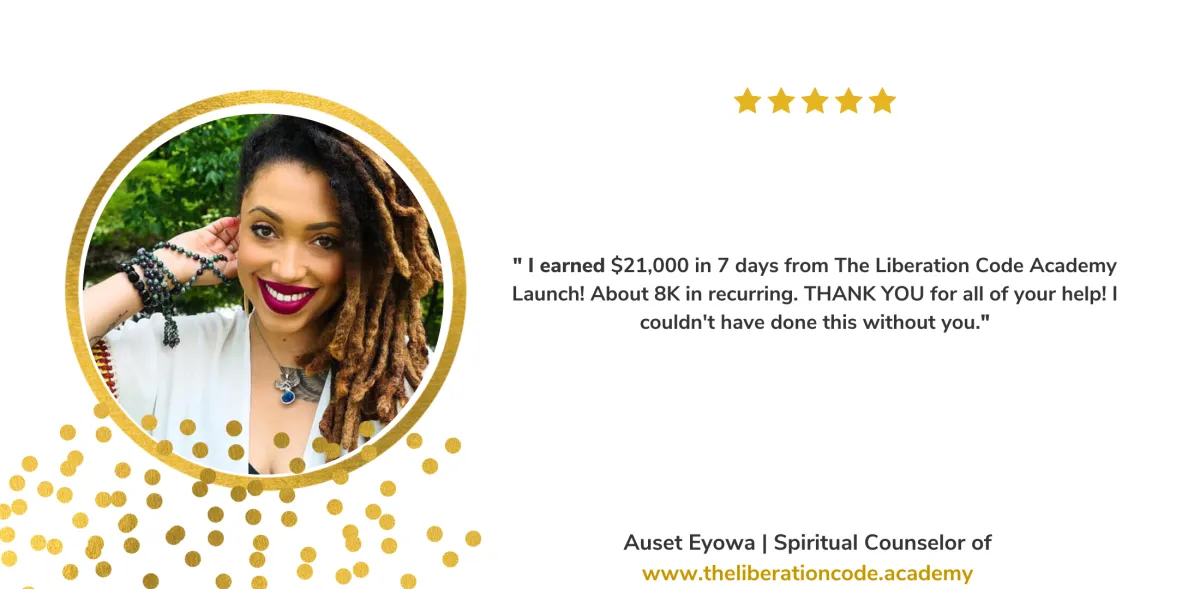
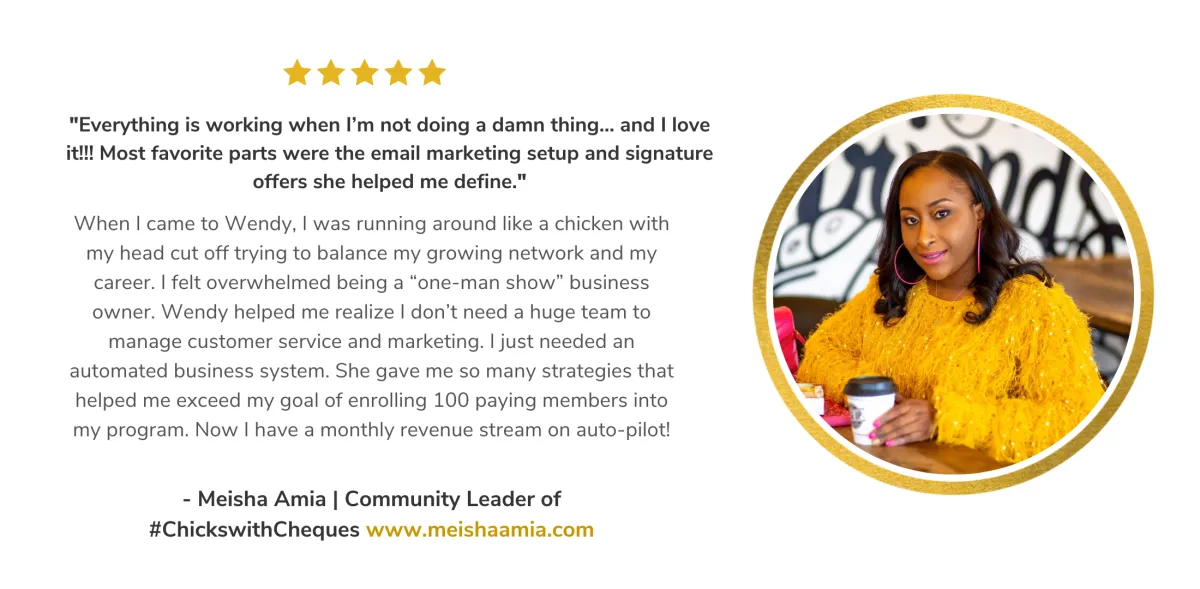
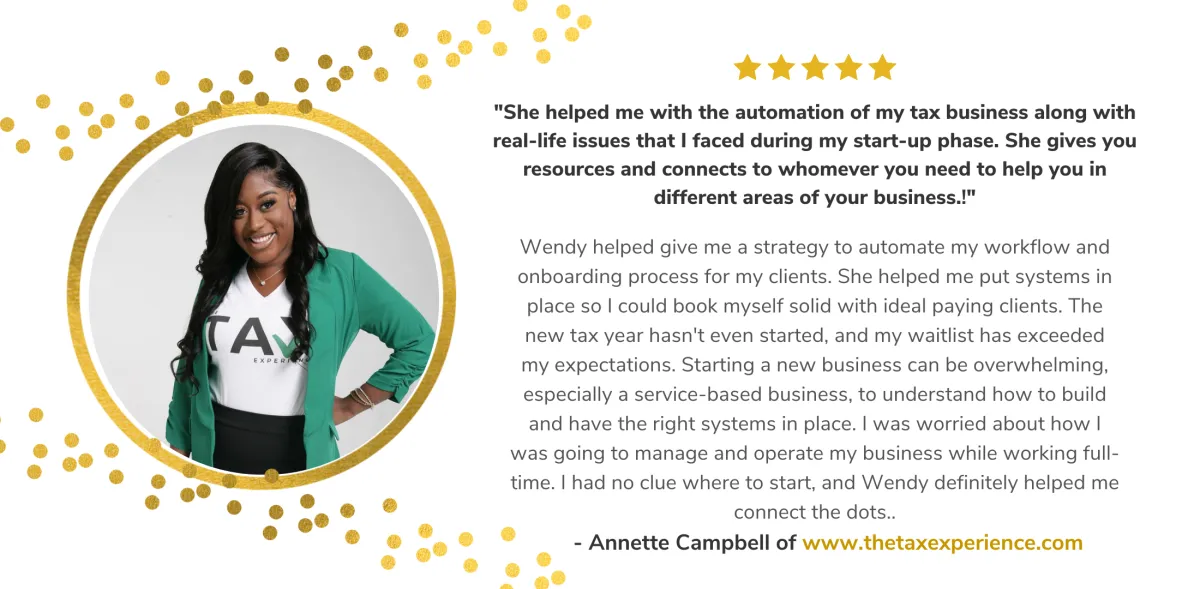
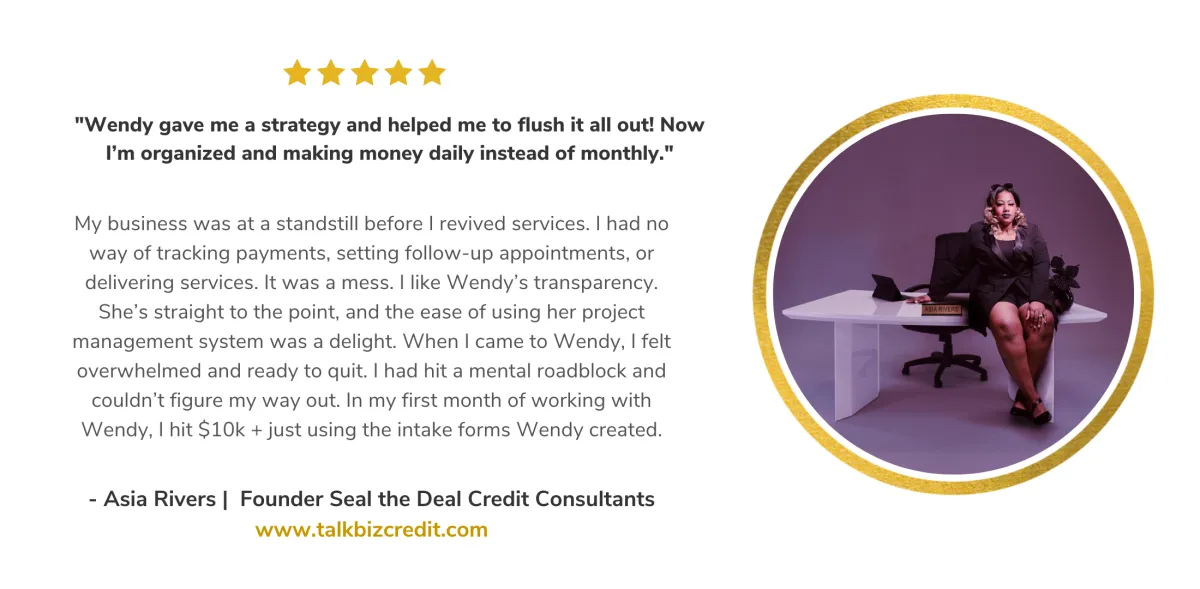

I BUILD FOR MORE THAN REVENUE. I look at the business. behind the business.
Most Entrepreneurs Build Around Opportunity.
I Help Them Build Around Intention.
I'm Wendy Nicole Anderson, Business Systems Strategist and Executive Advisor.
I don't measure a business by revenue alone. I look at how it's built.
For more than a decade, I've worked with service-based entrepreneurs to identify what success can make surprisingly easy to overlook: the way the business actually operates.
01 How decisions are made.
02 How work moves.
03 Where capacity is being lost.
04 Where opportunity is leaking.
05 Where the founder has quietly become the infrastructure.
06 Where the client experience is carrying unnecessary friction.
07 Where the entrepreneur has quietly become responsible for holding everything together.
Because revenue can tell me that a business is successful.
It cannot tell me whether that success is sustainable.
Every business decision is also a lifestyle decision.
“The business you build eventually becomes the life you live.”
My work is about understanding what the business requires now, what it will require next, and designing the operational infrastructure to support both.
You Have Two Ways to Begin.
Handled is a complete operational transformation built across three sequential containers.
You can commit to the entire engagement from the beginning or enter through Container One and move through each phase sequentially.
The methodology does not change.
The sequence does not change.
Only the way you choose to make the investment changes.
The Complete Handled Experience
$10,500 Paid in Full
Commit to the complete ninety day operational transformation from the beginning.
Your business moves through all three Handled containers in sequence:
Container One → Stabilize
Container Two → Strengthen
Container Three → Optimize
One engagement.
One continuous progression.
One complete operational transformation.
— OR —
Begin With Container One
$3,500 Per Container
Begin Handled with Container One for $3,500 and complete the Stabilization phase first.
When that work is complete, your next $3,500 investment moves the business into Container Two: Strengthen.
After Container Two is complete, the final $3,500 investment moves you into Container Three: Optimize.
Containers are completed in order because each phase establishes what the next phase needs.
You cannot skip ahead to Container Two or Three, and those containers are not offered independently.
Commit to the complete transformation upfront, or move through Handled one container at a time.
You Have Already Built the Business.
You have proven there is something here worth growing.
Now the question is whether the operation underneath it is prepared to carry where you want to take it.
Handled gives us ninety days to do the work deliberately.
Stabilize what is creating friction.
Strengthen the infrastructure underneath the business.
Optimize the operation for what comes next.
You bring the vision, the context, and the decisions only you can make.
I bring the operational judgment, architecture, and implementation required to turn those decisions into something the business can actually operate from.
You have already built the business.
Now let’s build the operation capable of carrying where you want to take it.
HANDLED™
90 Day Operational Transformation + Implementation
Stabilize. Strengthen. Optimize.
Copyright 2026 All Rights Reserved