
YOUR BUSINESS IS GROWING.
Can the Way You Operate
Actually Support Where
You’re Taking It?
A profitable business can still be operationally unsustainable.
The Business Capacity Assessment is a strategic diagnostic for service-based entrepreneurs who have built something that works, but recognize that the way their business operates may not have the capacity for what they are building next.
I evaluate your systems, workflows, client experience, offers, and operating structure to identify where capacity is being lost, what is creating unnecessary pressure or limiting growth, and what needs to change. The goal is to build the operational capacity to support more clients, revenue, visibility, responsibility, and opportunity, without requiring more and more of you to hold it all together.

Your Business Can Be Successful and Still Be Too Dependent on You
Growth does not automatically create capacity. In fact, growth often exposes where capacity was missing all along.
You may be generating revenue, serving clients well, and building a respected business while still operating in a way that requires too much of you.
Maybe:
1) too many decisions still require your involvement
2) important information lives in your head
3) client delivery changes depending on how busy you are
4) follow up is inconsistent, and opportunities get missed
5) your offers no longer make strategic sense together
6) workflows have accumulated instead of being intentionally designed
7) you have technology, but too much of the business is still manual
8) every increase in clients creates another increase in your workload
9) you keep solving problems the business should already know how to handle
10) the growth you want would require more personal capacity than you actually have available
That is not simply a productivity problem.
It is a capacity problem.
And eventually, the way you operate becomes the very thing limiting what the business can become.
Capacity Determines Whether Your Business Can Hold
What You’re Asking It to Become
Business capacity is your business’s ability to consistently absorb more clients, revenue, visibility, responsibility, and opportunity without sacrificing quality, profitability, client experience, or your well being.
Generating demand and having the infrastructure to support that demand are two different capabilities.
A business can have:
Great marketing and insufficient delivery capacity.
Strong revenue and weak operations.
A respected brand and an inconsistent client experience.
Excellent offers and inefficient workflows.
More opportunities than its current structure can successfully support.
That is why I do not begin with:
“What system should we automate?”
I begin with a more important question:
What does this business need to have the capacity for?
Then we determine whether the way it currently operates can support it.
Growth Exposes What Your Current
Business Structure Can No Longer Support
Most operational problems are easy to overlook while the business is still small enough for you to compensate for them personally.
You remember the details.
You follow up manually.
You answer every question.
You fix the mistakes.
You make the decisions.
You keep everything moving.
You become the system.
And for a while, it works.
Until the business requires more than you can personally carry.
Then the cost starts showing up in lost revenue, slower execution, inconsistent delivery, missed opportunities, decision fatigue, client experience gaps, unnecessary expenses, and growth you cannot confidently absorb.
The problem is not always that your business needs more growth.
Sometimes the business needs the capacity to successfully hold the growth you are already pursuing.
Every Business Has a Different Constraint
Your assessment is designed to identify the constraints limiting your capacity, not force your business through a generic checklist.
01Business Design + Operational Structure
We evaluate whether the way your business is structured supports where you're going or creates unnecessary complexity.
This may reveal unclear responsibilities, disconnected processes, structural gaps, or ways of operating that made sense at an earlier stage but no longer serve the business you're building.
02Founder Dependency + Decision Bottlenecks
We identify where the business relies unnecessarily on your memory, judgment, availability, approvals, or intervention to keep moving.
The goal is not removing you from your business. It is distinguishing where your involvement creates value from where it has become an operational dependency.
03Revenue Leaks + Client Journey Gaps
We examine how people move from interest to inquiry, purchase, onboarding, delivery, retention, referral, and repeat business.
This may uncover weak follow up, inconsistent communication, buying friction, pricing issues, underleveraged clients, or places where revenue is quietly being lost.
04Offer Ecosystem + Growth Opportunities
We evaluate whether your offers support the business you're actually trying to build, including positioning, profitability, delivery demands, client progression, lifetime value, and whether your offer ecosystem creates leverage or unnecessary complexity.
05Workflow Efficiency + Automation
We identify repetitive work, unnecessary manual processes, communication gaps, duplicated effort, and responsibilities consuming time without creating proportional value.
Then we determine what should be simplified, standardized, automated, delegated, redesigned, or eliminated.
Automation is not the strategy. Operational efficiency is.
06Capacity Constraints + Growth
We identify what currently limits your ability to absorb more clients, revenue, visibility, responsibility, or opportunity without creating additional strain on the business.
The question isn't simply how to grow. It's what needs to become stronger so the business can support that growth well.
07Client Experience Consistency
We evaluate whether clients receive the same intentional, high quality experience regardless of when they enter your business or how busy you are.
This may reveal opportunities to strengthen onboarding, communication, expectations, delivery, follow up, retention, and referrals.
08Strategic Priorities
Not every problem deserves your attention right now.
We determine which changes create the greatest leverage, what needs to happen first, what can wait, and where your time, money, energy, and resources are best invested.
Your Business Capacity Scorecard
I don't evaluate your business based on instinct alone.
I use a structured Business Capacity Scorecard to evaluate the conditions that determine how effectively your business can support growth.
The scorecard gives us a clear benchmark for understanding:
Where your business is strong.
Where capacity is being lost.
What requires attention before your next stage of growth.
Your Business Capacity Scorecard Evaluates:
01 — Business Design
How effectively your current structure supports the business you're building.
02 — Operational Capacity
Your ability to consistently deliver without sacrificing quality, profitability, client experience, or your personal capacity.
03 — Founder Dependency
How heavily the business relies on your memory, decisions, availability, approvals, and daily involvement.
04 — Client Journey
How effectively clients move from initial interest through purchase, delivery, retention, referral, and repeat business.
05 — Workflow Efficiency
How work moves through the business and where friction, repetition, unnecessary complexity, or manual effort is consuming capacity.
06 — Revenue Protection
Where weak processes, inconsistent follow up, pricing, communication, or client progression may be costing the business revenue.
07 — Operational Readiness
How prepared the business is to absorb additional clients, larger opportunities, increased visibility, responsibility, and growth.
08 — Strategic Alignment
Whether your offers, operations, systems, resources, priorities, and long term vision are working together.
Every growing business eventually reaches the limits of its current capacity.
The question isn't whether your business has limits. It's whether you know where capacity is being lost and what needs to change before those limits start costing you growth.
Your Assessment Begins Before We Ever Meet.
The Business Capacity Assessment is designed to give me visibility into how your business actually operates, not simply how it is described on an intake form.
Before we meet, I've already spent time inside your business, reviewing the systems, platforms, workflows, and client touchpoints that keep it running and developing an initial perspective on where capacity may be constrained.
01. Complete Your Business Intake + Provide Access
You'll complete a detailed intake covering your business model, offers, operations, client journey, growth objectives, current constraints, and what you're trying to build next.
You'll also provide secure access to the platforms relevant to your day to day operations so I can evaluate the business within the environment where the work is actually happening.
Depending on your business, this may include your CRM, website, scheduling and payment systems, email marketing platform, project management tools, client portals, automation platforms, team communication systems, and other technology supporting your client experience and internal operations.
I need to see how the business works, not just hear how it's supposed to work.
02. I Assess the Business
I review your intake alongside the systems and platforms supporting your operations.
I'm looking at how information moves, how clients move through the business, where work becomes manual, where processes disconnect, where you or your team have learned to compensate, where technology is being underused, and where capacity, revenue, time, or opportunity may be getting lost.
By the time we meet, I'm not starting with questions. I'm bringing you what I've already uncovered.
03. We Examine What I Found
During our private working session, we walk through the findings together.
We challenge assumptions where necessary, separate symptoms from root causes, connect issues that may appear unrelated, and determine what is actually constraining the business.
This is where we determine what deserves your attention, what needs to change, and what should happen first.
04. You Receive Your Business Capacity Roadmap
Following the assessment, you'll receive your Business Capacity Scorecard and a customized strategic roadmap documenting the most important findings, recommendations, priorities, and next steps.
You'll know:
- What's working and should be protected.
- Where capacity is being lost.
- What's creating unnecessary dependency, friction, or exposure.
- What needs to change.
- What should happen first.
- And what doesn't deserve your attention yet.
You Leave Knowing What Your Business Actually Needs From You Next.
By the end of the Business Capacity Assessment, you have more than a list of things that could be improved.
You have a clearer understanding of how your business is actually operating, where capacity is being lost, and what deserves your attention first.
You receive:
Your Business Capacity Scorecard
A structured evaluation of where your business is strong, where capacity is constrained, and where your current operation may not support what you're building next.
Your Operational Findings
A clear diagnosis of the patterns, gaps, dependencies, inefficiencies, revenue exposure, and structural issues uncovered during my review.
Your Strategic Recommendations
My recommendations for what should be simplified, standardized, automated, delegated, redesigned, strengthened, or eliminated based on what I find.
Your Prioritized Business Capacity Roadmap
A clear order of operations for what needs attention now, what should happen next, what can wait, and where your resources can create the greatest leverage.
You Stop Making Operational Decisions in Isolation.
You understand how the pieces connect.
How your offer structure affects delivery.
How delivery affects capacity.
How workflows affect client experience.
How founder dependency affects growth.
How technology affects execution.
How operational gaps can quietly affect revenue.
And how all of it determines what the business can realistically support next.
That perspective changes how you invest your time, money, technology, support, and attention.
Because the expensive part isn't always fixing the business.
It's hiring before understanding the workflow.
Automating a process that should have been redesigned.
Buying technology the business doesn't need.
Driving more demand into an operation that isn't prepared to absorb it.
Or spending another year personally compensating for problems the business should be equipped to handle.
The Goal Is Not to Fix Everything.
It's to know what matters, what doesn't, and what needs to become stronger for your business to have the capacity for where you're taking it
Before You Reserve Your
Business Capacity Assessment
Business Capacity Assessment
Will you tell me what I should do next?
Yes.
This assessment is designed to give you clear recommendations based on what I uncover inside your business.
I'll tell you what I believe deserves your attention, what needs to change, what can wait, and where I see the greatest opportunity to create operational leverage.
You remain the decision-maker, but you will not leave wondering what I recommend.
Will you implement the recommendations for me?
Implementation is not included in the Business Capacity Assessment.
This engagement is focused on assessment, diagnosis, strategic recommendations, and prioritization.
If what we uncover requires implementation support, we can determine the appropriate next engagement based on what your business actually needs.
Is this for established businesses?
Yes.
This assessment is particularly valuable for service based entrepreneurs who are already generating revenue, serving clients, and operating an established business, but recognize that the way the business currently runs may not support where they are trying to take it.
You do not need a broken business to need a better operating structure.
Is this appropriate for a newer business?
Potentially.
You should already have a defined expertise, offer, business model, and enough operating activity for me to meaningfully assess how the business works.
If you are still determining what business you want to build or what you want to sell, the Business Capacity Assessment is not the appropriate starting point.
Do I need a website?
No.
I need access to the systems, platforms, workflows, and information necessary to understand how your business actually operates.
Your website may be part of that assessment, but it is not a requirement.
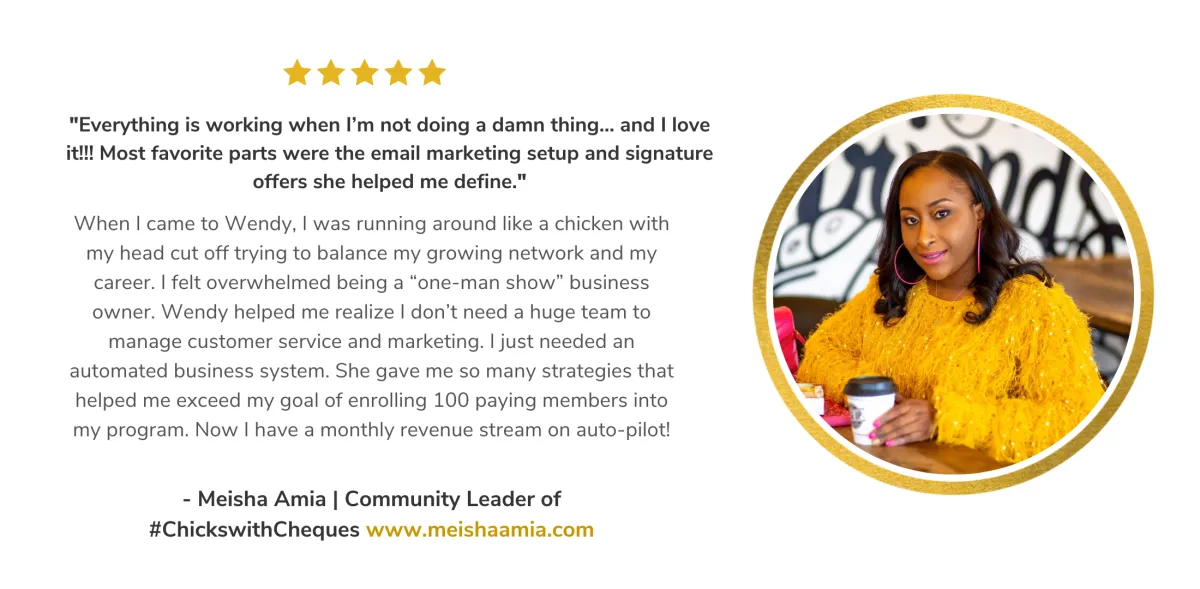
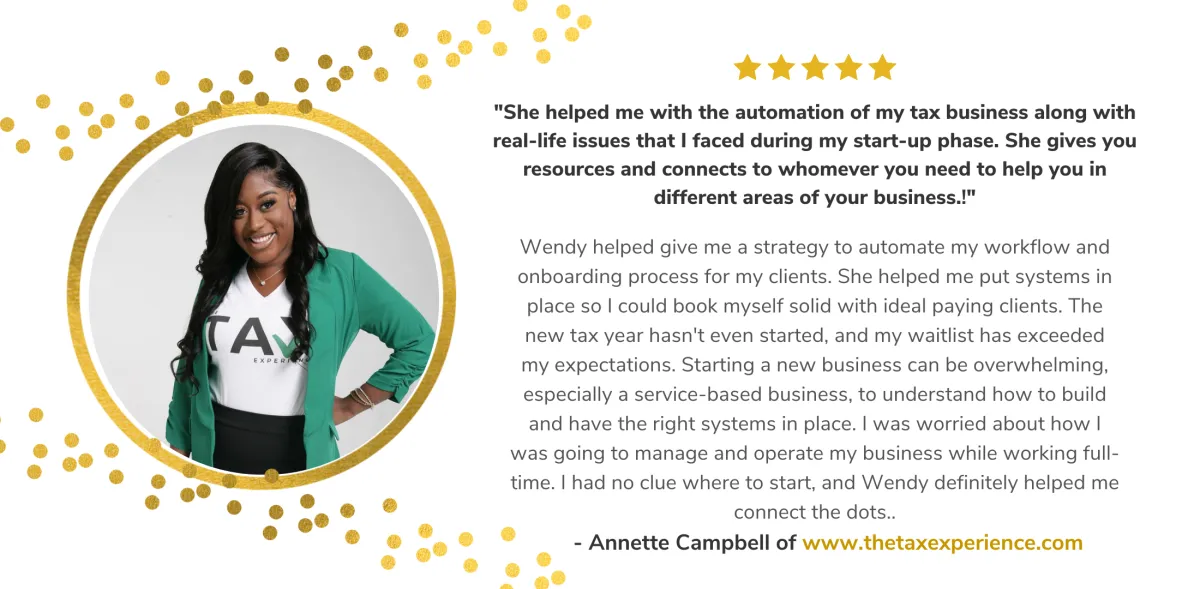
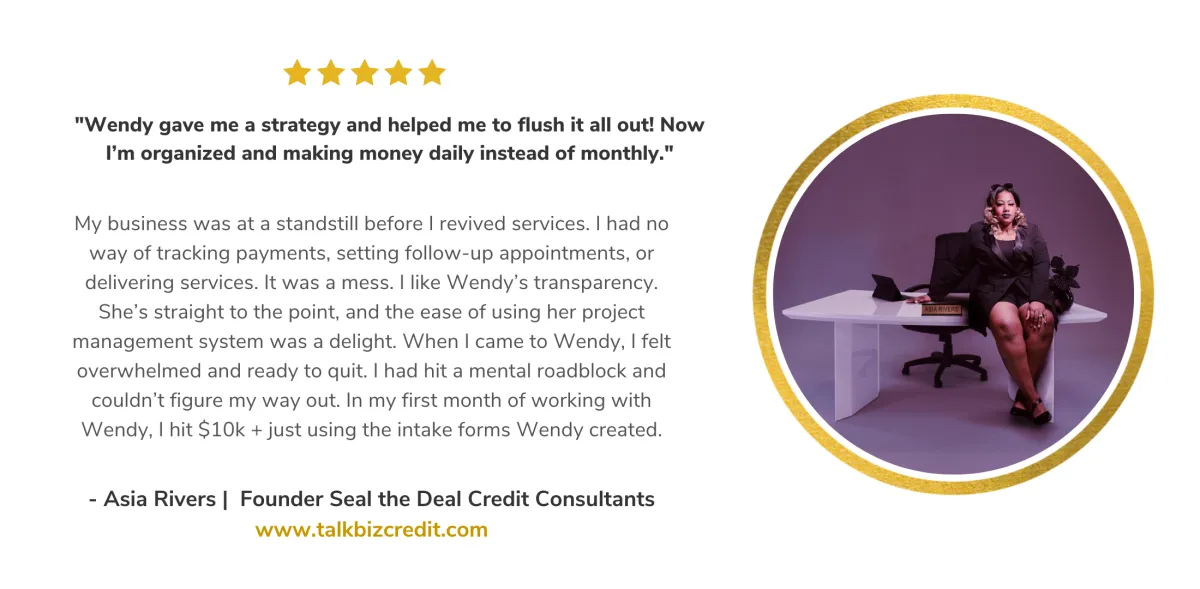
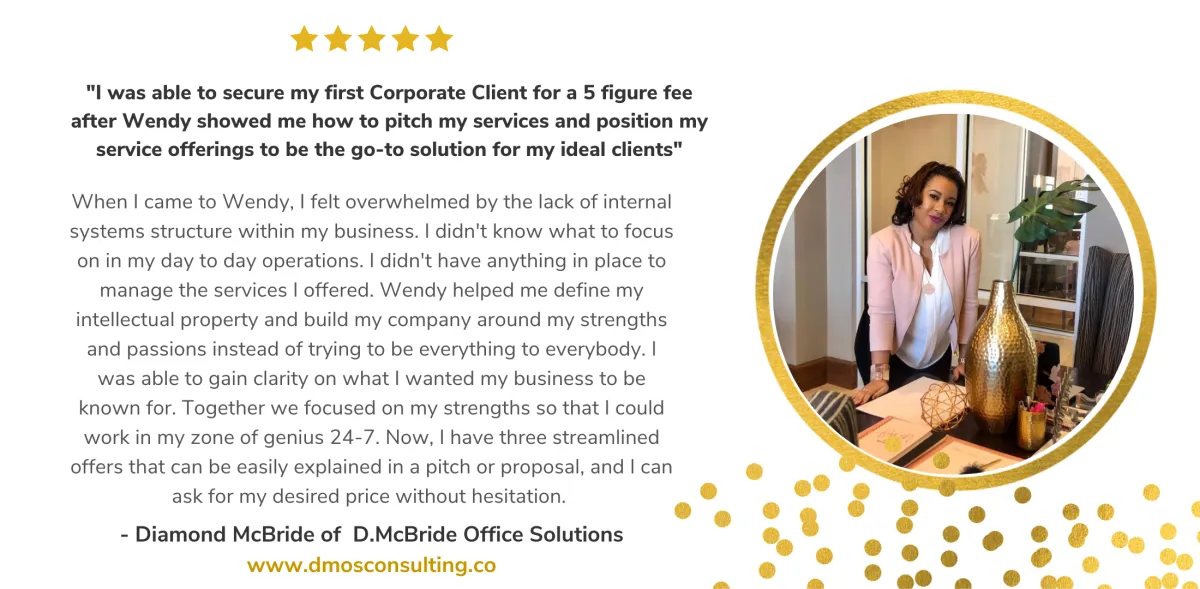
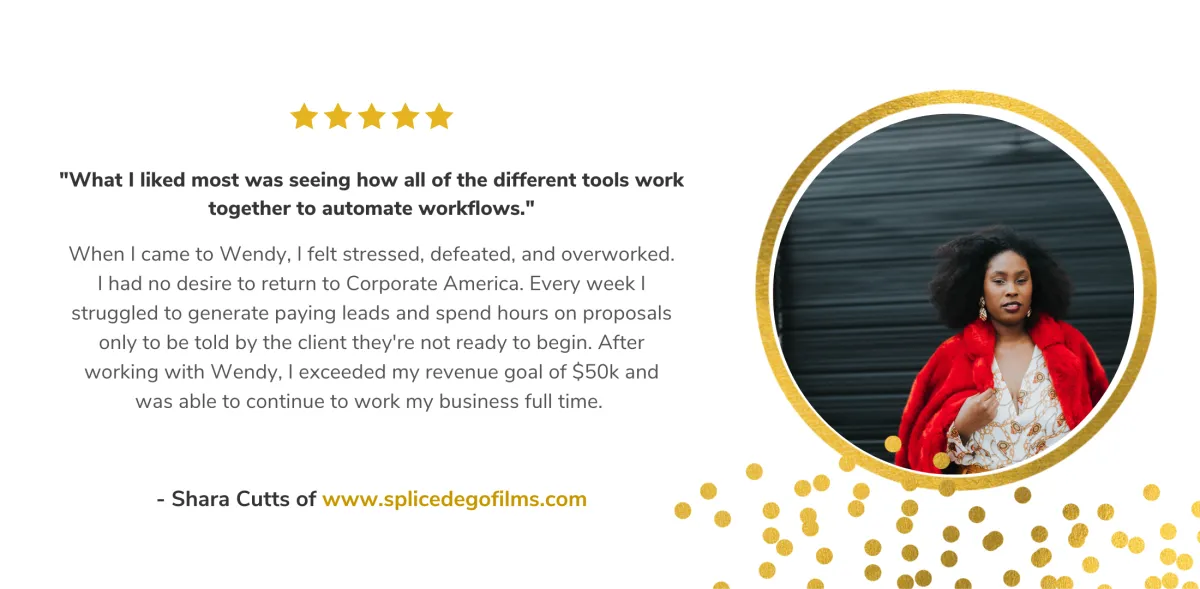
CLIENT RESULTS
Better Decisions Build Better Businesses.
The greatest transformation isn't simply generating more revenue.
It's building a business that can support the success you've worked so hard to create.


I BUILD FOR MORE THAN REVENUE. I look at the business. behind the business.
Most Entrepreneurs Build Around Opportunity.
I Help Them Build Around Intention.
I'm Wendy Nicole Anderson, Business Systems Strategist and Executive Advisor.
I don't measure a business by revenue alone. I look at how it's built.
For more than a decade, I've worked with service-based entrepreneurs to identify what success can make surprisingly easy to overlook: the way the business actually operates.
01 How decisions are made.
02 How work moves.
03 Where capacity is being lost.
04 Where opportunity is leaking.
05 Where the founder has quietly become the infrastructure.
06 Where the client experience is carrying unnecessary friction.
07 Where the entrepreneur has quietly become responsible for holding everything together.
Because revenue can tell me that a business is successful.
It cannot tell me whether that success is sustainable.
Every business decision is also a lifestyle decision.
“The business you build eventually becomes the life you live.”
My work is about understanding what the business requires now, what it will require next, and designing the operational infrastructure to support both.
THE BUSINESS YOU HAVE BUILT HAS GOTTEN YOU HERE. THE QUESTION IS WHETHER IT HAS THE CAPACITY FOR WHERE YOU'RE TAKING IT NEXT.
If Your Business Grew Significantly From Here,
Could the Way You Operate Actually Support It?
Would your current operation be able to absorb it?
Or would success simply require more of you?
More clients.
More revenue.
More visibility.
More responsibility.
Bigger opportunities.
More decisions.
More remembering.
More troubleshooting.
More follow up.
More hours.
More responsibility sitting on your shoulders.
The goal is not simply to build a business that grows.
It's to build a business with the capacity to support that growth without sacrificing quality, profitability, client experience, or your well being.
If the business is working, but the way you're operating it no longer makes sense for where you're trying to go, this is where we figure out why, what needs to change, and what deserves your attention first.
Business Capacity Assessment
Investment: $1,500
Copyright 2026 All Rights Reserved